Sint Maarten · Saint-Martin · One island, two countries
St Maarten Villas: Rentals & Villas for Sale on Both Sides of the Island
St Maarten is 87 square kilometers split between two countries — Dutch Sint Maarten in the south, French Saint-Martin in the north — and it has been that way since the Treaty of Concordia in 1648. There is no border post. You can rent a villa above Simpson Bay, have lunch at a lolo in Grand Case, and be back for sunset without showing a passport. That one fact shapes every villa decision on this island: you are not choosing which island to visit, only which side to sleep on.
It also makes villas the natural way to stay here. The island has 37 beaches but its hotels cluster in a handful of spots; the villas sit everywhere the hotels don't — on the cliffs at Cupecoy, behind the gates of Terres Basses, on the hillsides above Oyster Pond. For a group of six or more, a villa usually beats a resort on price per person as well as on space, and you get a kitchen ten minutes from some of the best restaurants in the Caribbean.
This guide covers the villa areas side by side, what pools, beachfront, and staff actually cost, what to know if you are thinking about buying rather than renting, and when to book. Rentals and sales inquiries both go to our partner agency on the island — details at the bottom.
Dutch side · Sint Maarten
Dutch Side Villas (Sint Maarten)
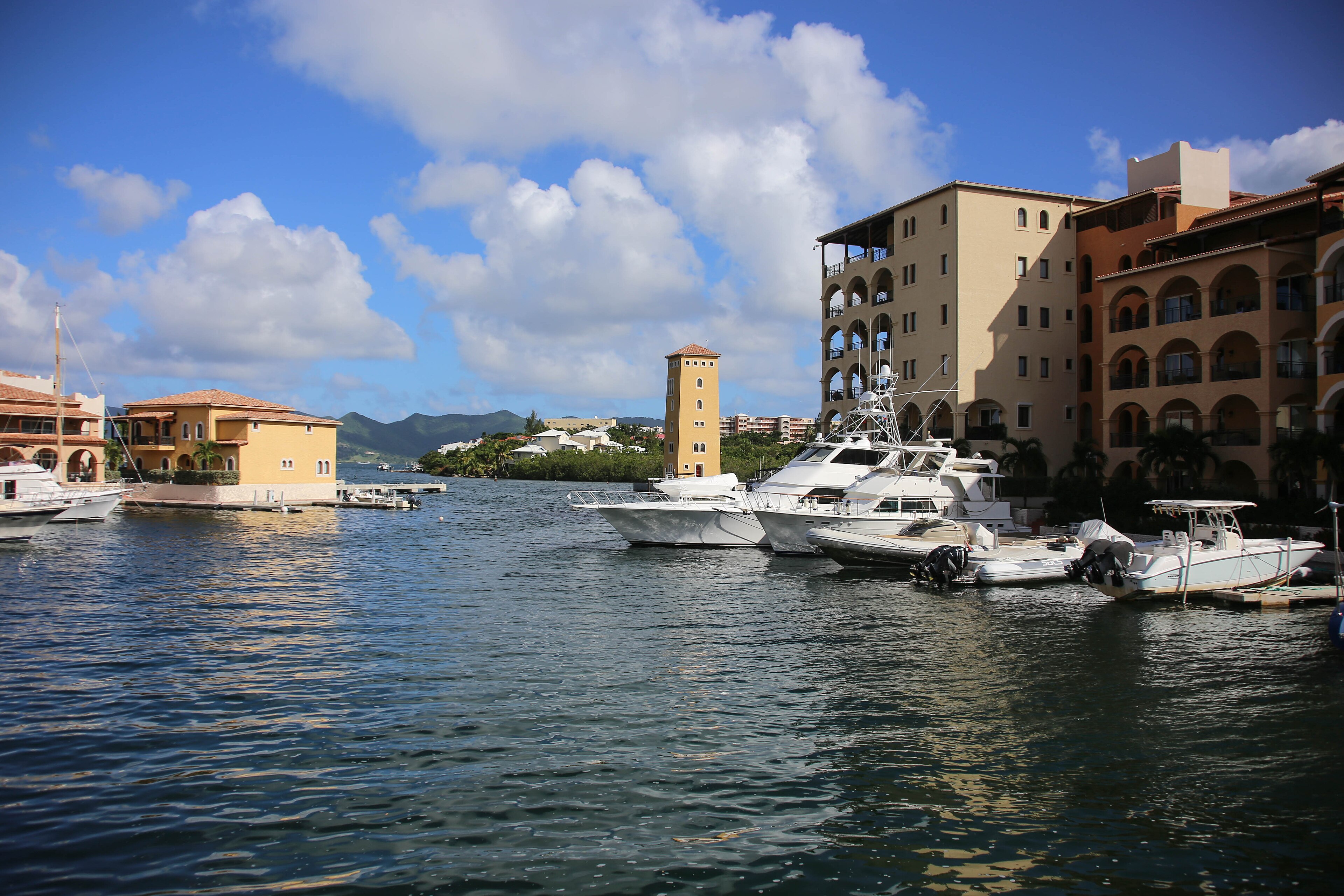
The Dutch side is the island's engine room: Princess Juliana International Airport (SXM), the cruise port at Philipsburg, the casinos, and most of the nightlife. Villas here trade a little tranquility for convenience — nothing below is more than about 25 minutes from the airport.
Simpson Bay & Pelican Key
Simpson Bay is the restaurant-and-marina hub, five to ten minutes from the airport, with villas and condos around the lagoon. Pelican Key, the small peninsula next door, is one of the island's densest villa zones — walkable to dinner, good sea views, sensible prices. If it's your first trip and you want everything close, start here.
Cupecoy & Beacon Hill
Cupecoy sits on the sandstone cliffs at the island's western tip, minutes from the French border and the golf course at Mullet Bay. It has gone upscale fast — modern towers and cliff-top villas with long sunset views toward Anguilla. Beacon Hill is the closest villa pocket to the runway: convenient, and the place planespotters actually stay for Maho Beach.
Dawn Beach, Oyster Pond & Guana Bay
The east coast is the quiet Dutch side. Dawn Beach has the sunrise and the snorkeling; Oyster Pond wraps around a protected marina on the French border; Guana Bay is a residential hillside with big Atlantic views and surf below. These suit return visitors who want space and don't mind driving to dinner.
Indigo Bay & Philipsburg / Great Bay
Indigo Bay is the newest master-planned villa community on the south coast, between Cole Bay and Philipsburg. Great Bay itself is town — Front Street duty-free shopping and the cruise pier — with a small cluster of villas on the residential edges for travelers who want to walk to everything.
French side · Saint-Martin
French Side Villas (Saint-Martin)
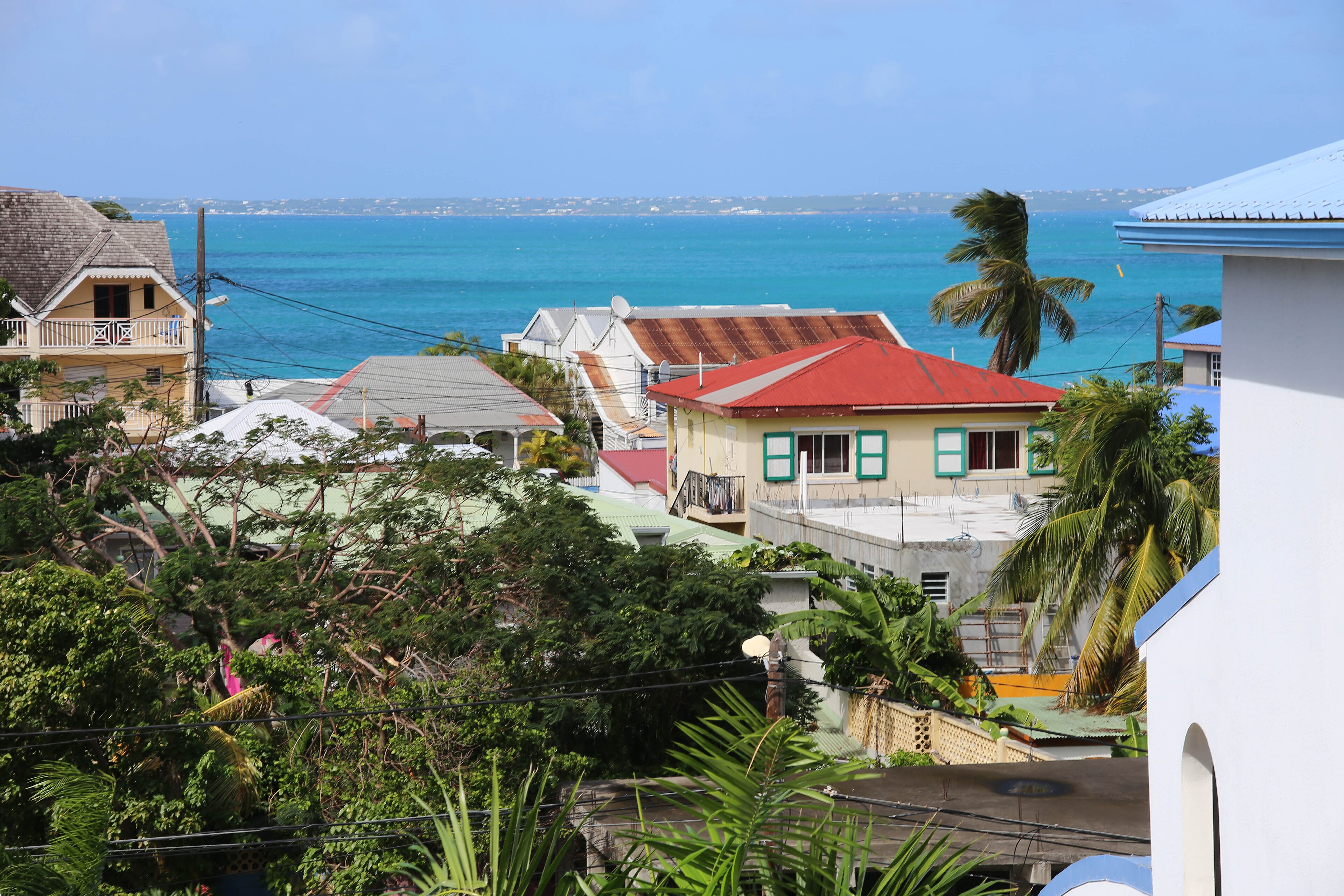
The French side is slower, greener, and where most of the island's serious villa real estate sits. Boulangeries instead of casinos, euros instead of guilders (though dollars work everywhere), and beaches that regularly make Caribbean top-ten lists.
Terres Basses
The gated lowlands between Baie Rouge, Baie Longue, and Plum Bay are the island's luxury address, full stop. Large private estates, three of the best beaches on the island, fifteen minutes from the airport, and the deepest staffed-villa inventory in the region. Peak-season weeks here book out a year ahead.
Orient Bay & Anse Marcel
Orient Bay is the French side's beach resort in village form — two kilometers of sand, beach clubs, watersports, and a grid of villas with pools a few minutes' walk from it all. Anse Marcel, one bay north, is the sheltered, secluded alternative: a small marina, calm water, and hillside villas above a quiet cove.
Grand Case & Happy Bay
Grand Case is the culinary capital of the Caribbean — one beachfront street running from lolos (open-air barbecue shacks) to serious French dining rooms. Villas sit on the hillsides above the bay. Happy Bay, the undeveloped beach next door, is a short walk through the scrub and one of the island's best-kept quiet spots.
Baie Rouge & Baie Longue
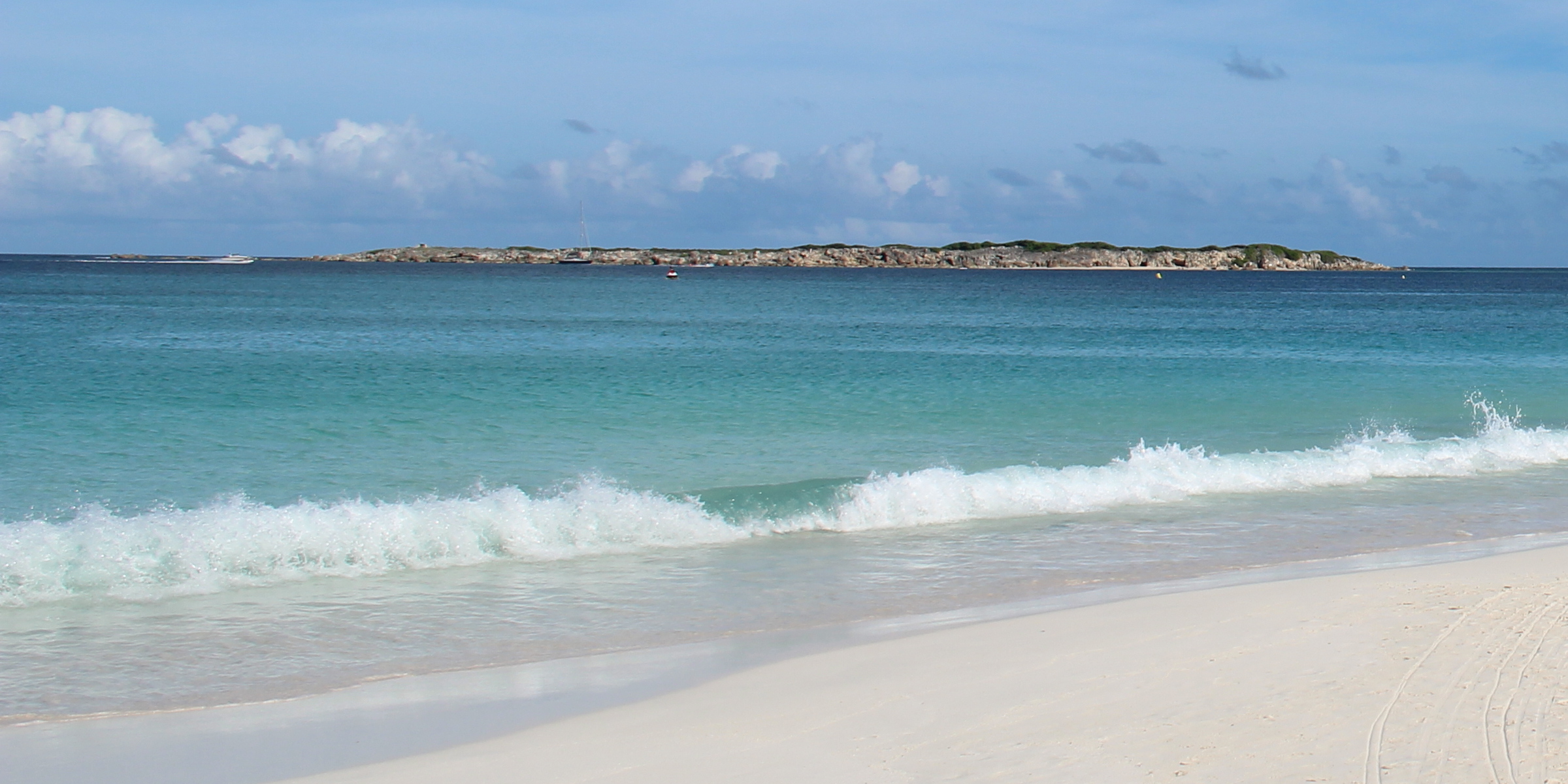
Technically the beaches of Terres Basses, worth naming on their own: Baie Longue is the island's longest beach and its most photographed stretch of empty sand; Baie Rouge is wilder, red-tinged, and swimmable most of the year. Beachfront villas on either are the island's blue-chip rentals — and its blue-chip listings when they sell.
What to look for
Villas with Private Pools & Beachfront Villas
A private pool is close to standard here — assume it unless a listing says otherwise, and treat heated pools and true infinity edges as the differentiators. Beachfront is the scarcer thing. Genuine toes-in-the-sand villas concentrate in a few places: Baie Longue and Plum Bay in Terres Basses, parts of Dawn Beach, and a handful of homes at Guana Bay and Simpson Bay. "Ocean view" on this island usually means a hillside perch — often the better deal, since you trade beach access you'd drive to anyway for elevation, breeze, and a view of Anguilla or St Barth on the horizon.
One honest note the brochures skip: east-facing Atlantic beaches (Dawn Beach, Guana Bay, Orient Bay at times) can see sargassum seaweed in the summer months. If a pristine beach out front matters in July, ask us — conditions vary bay by bay and year by year.
Service level
Staffed & Luxury Villas — Chefs, Butlers, Concierge
Housekeeping several times a week is included at most villas. The full-staff experience — private chef, butler service, daily housekeeping, on-call concierge — is standard at the top of the Terres Basses market and bookable as an add-on nearly everywhere else. A private chef typically charges per meal plus the cost of groceries; for a group, that often lands near what the same dinner costs in a Grand Case restaurant, without anyone driving home after.
Concierge services on the island will provision the villa before arrival, arrange boat days to Pinel Island or Anguilla, book Grand Case tables in February (do not attempt this yourself on 48 hours' notice), and sort car rentals and airport transfers. Tell us what kind of trip it is and we'll match the staffing level to it.
Ownership
St Maarten Villas for Sale
A meaningful share of the people searching for villas here are not just renting — they're window-shopping a purchase, and this island makes that unusually workable. Neither side restricts foreign ownership, there is no residency requirement to buy, and the rental market you just experienced as a guest is the same one that can carry a villa's running costs when you're not on island.
Buying on the Dutch side vs the French side
This is the decision that matters, because you are choosing a legal system, not just a neighborhood. On the Dutch side, transactions run through a civil-law notary; property is freehold or long-lease government land; and the buyer pays transfer tax — currently 4% — plus notary fees, putting all-in closing costs around 5–6%. On the French side you are buying under French law with a notaire: closing costs on resale property run roughly 7–10%, and French succession rules apply to how the property passes on. Neither is better in the abstract; they fit different ownership plans, and it pays to pick a side before you start viewing.
What villas cost to buy
As of mid-2026, entry points look like this: condos from around $300,000, standalone three-bedroom villas from roughly $600,000 to $1.5 million depending on area and view, and the premium tier — Terres Basses estates, true beachfront — from about $2 million to well past $10 million. Cupecoy and Indigo Bay carry most of the new-build inventory; the French side carries most of the trophy listings.
How the process works
Expect an offer and preliminary agreement, a deposit held in escrow with the notary, and a closing timeline of one to three months. Financing exists locally on both sides but most foreign buyers close in cash. Our partner agency is based on the island and handles both rentals and sales — the same inquiry address below works whether you want a week in February or a listing sheet. Figures above are current as of mid-2026; we'll confirm the details for your situation.
Timing
When to Go & When to Book
High season runs mid-December through April: dry, 27–29°C, trade-wind breeze, and priced accordingly. February and March are the sweet spot for weather. The festive weeks — Christmas through New Year — are their own market, with minimum stays of 7 to 14 nights and the best villas reserved by guests who rebook on their way out the door; think 9 to 12 months of lead time. For the rest of high season, 4 to 6 months ahead is usually enough.
May through early July is the value window: weather still good, beaches quiet, rates down 30–40%. Hurricane season officially runs June 1 to November 30 and peaks August through October — villas here are rebuilt to serious standards since Irma in 2017, but late-summer bookings should carry travel insurance, and many owners offer flexible terms for exactly that reason.
Practicalities
Getting There & Getting Around
Princess Juliana International Airport (SXM) on the Dutch side is the gateway, with nonstop flights from the US East Coast, Canada, Amsterdam, and Paris. It is also, famously, the airport where arrivals skim Maho Beach — worth watching once from the sand even if you'd never stay there. The French side's small Grand Case airfield handles regional hops. From SXM: Beacon Hill and Simpson Bay in under 10 minutes, Cupecoy about 10, Terres Basses about 15, Philipsburg 20–25, and Grand Case or Orient Bay 30–45 depending on traffic.
About that traffic: the island has one real bottleneck, the Simpson Bay–Cole Bay corridor, and a drawbridge that stops it entirely a few times a day for the yachts. Locals plan around it; so should you. A rental car is effectively mandatory for a villa stay — driving is on the right on both sides, distances are short, and taxis are neither cheap nor plentiful in the villa areas. Dollars are accepted island-wide; officially the Dutch side uses the Caribbean guilder and the French side the euro.
Questions
Frequently Asked Questions
How much does a villa in St Maarten cost per night?
In high season (mid-December through April), comfortable two- to three-bedroom villas generally run $350–$800 per night. Larger or beachfront homes run $1,000–$3,000, and staffed luxury estates in Terres Basses can exceed $5,000 per night. Low-season rates (May through November) are typically 30–40% lower, and Christmas and New Year weeks carry premium pricing with 7–14 night minimum stays.
Is a villa cheaper than a hotel in St Maarten?
For groups of six or more, usually yes. A four-bedroom villa at $800 per night works out to around $100 per person, below the island's beach-resort room rates, and a villa kitchen cuts restaurant spending. For couples, hotels are often cheaper — villas win on space and privacy rather than price.
What is the best month to visit St Maarten?
February and March offer the most reliable weather — dry, breezy, and around 28°C — though at peak prices. December through April is high season overall. May, June, and early July are the value window: good weather, fewer crowds, lower rates. Hurricane season officially runs June through November and peaks August to October.
Dutch side or French side — which is better for a villa stay?
The Dutch side (Sint Maarten) suits travelers who want restaurants, casinos, nightlife, and a short drive from the airport — Simpson Bay, Cupecoy, and Pelican Key are the main villa areas. The French side (Saint-Martin) is quieter and more residential, with the island's top beaches and dining — Terres Basses is the luxury enclave, Orient Bay the beach hub, Grand Case the food capital. There is no border control, so wherever you stay you can use the whole island.
Do St Maarten villas come with staff or a chef?
Most villas include housekeeping several times a week. Full-time staff — private chef, butler, daily service — is standard in the top Terres Basses estates and available as an add-on almost everywhere else. Private chefs on the island typically charge per meal plus groceries, and provisioning services can stock the villa before you land.
Can I buy a villa in St Maarten as a foreigner?
Yes. Neither side of the island restricts foreign buyers. On the Dutch side, a civil-law notary handles the transfer and the buyer pays transfer tax (currently 4%) plus notary fees — all-in closing costs land around 5–6%; property is either freehold or long-lease government land. On the French side, a notaire handles the sale under French law, closing costs on resale property run roughly 7–10%, and French succession rules apply to the property. The two systems differ enough that you should decide which side fits your plans before you start viewing.
What areas should I avoid in Sint Maarten?
St Maarten is generally safe for visitors, and villa areas like Terres Basses, Cupecoy, and Pelican Key are quiet. The practical rules: never leave anything visible in a rental car (car break-ins are the most common tourist complaint), skip unlit back streets in Philipsburg and Marigot late at night, and check the sargassum forecast before booking an east-facing beach in summer. The rush-hour bottleneck around Simpson Bay and Cole Bay is worth avoiding too — plan around it rather than through it.
When should I book a St Maarten villa?
For Christmas, New Year, and February, book 9–12 months ahead — the best villas take repeat bookings year after year. For the rest of high season, 4–6 months is usually enough. Low-season stays can often be arranged within weeks, and it is the one time of year when rate flexibility is realistic.
Inquiries
Rent or Buy — Talk to Someone on the Island
Inquiries go directly to our partner agency based on St Maarten — people who live where you're looking. Tell us your dates and party size, or tell us you're buying; the same address covers both.
Email us — info@sintmaartenvillas.com
One line with your dates and party size is plenty — we'll take it from there.